

⚠️The Challenge: Solar Inverter Overload Latency
In hybrid and off-grid solar energy systems, sudden grid failures or high-power appliance activations (water pumps, induction cookers, air conditioning units) can instantaneously trip solar inverters into emergency overload shutoff within fractions of a second.
Traditional consumer smart home ecosystems (Tuya, SmartLife, eWeLink) rely on cloud roundtrips with 1.5–5.0 seconds of latency. By the time a cloud server receives a high-wattage spike notification and commands a smart plug to open, the solar inverter has already suffered a voltage collapse and shut down power to the entire property.
💡The Upside Solution: 100% Local Sub-50ms Shedding
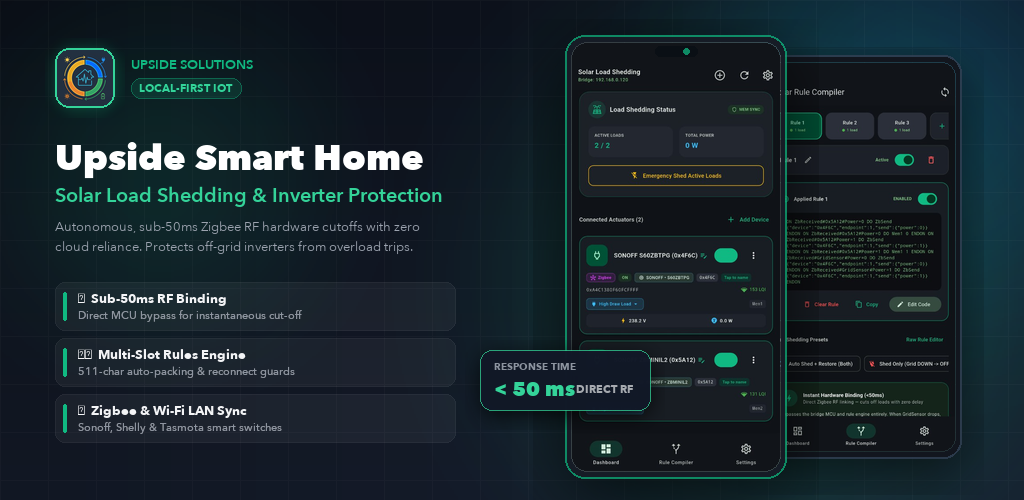
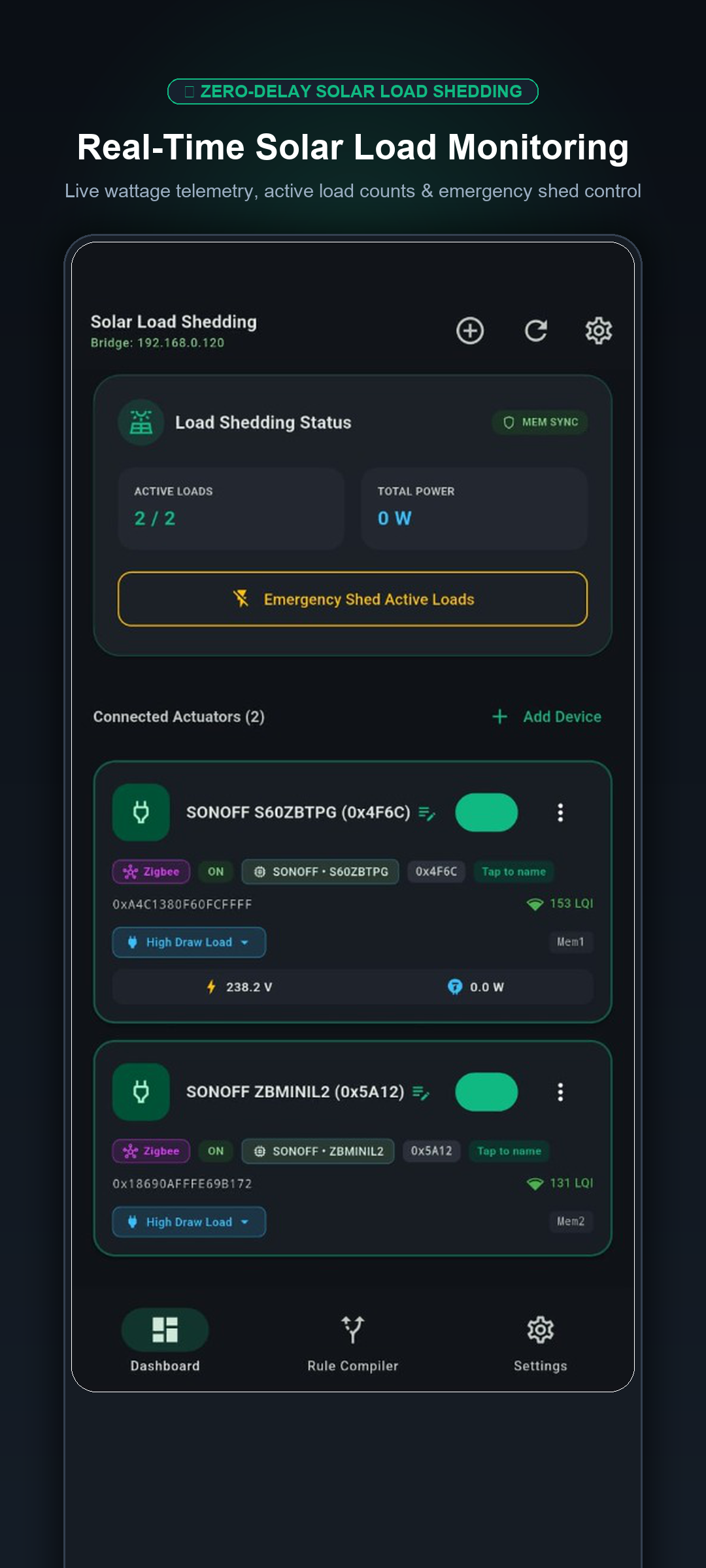
Upside Smart Home was created by Upside Solutions as a zero-cloud, local-first IoT management platform. Built in Flutter for mobile devices and interfacing directly with Sonoff Zigbee Bridges running Tasmota open-source firmware, the solution moves rule execution from remote servers straight into the local Zigbee radio layer.
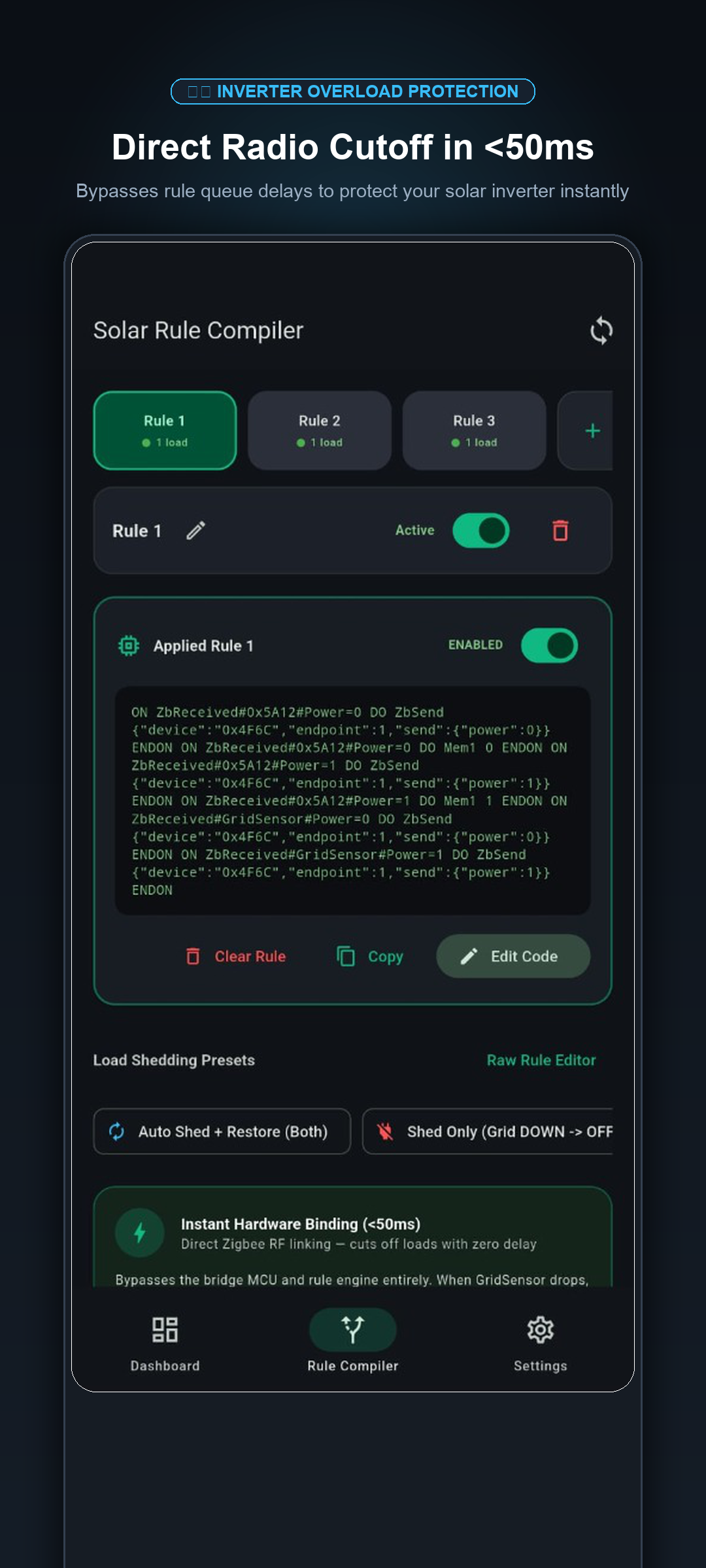
By establishing direct peer-to-peer RF Cluster 6 (On/Off) hardware bindings (ZbBind) between grid sensors and heavy load actuators, load shedding occurs in under 50 milliseconds—completely bypassing bridge MCU processing, local Wi-Fi, and the internet.
⚙️Core Engineering Innovations
Atomic Zero-Delay Rules
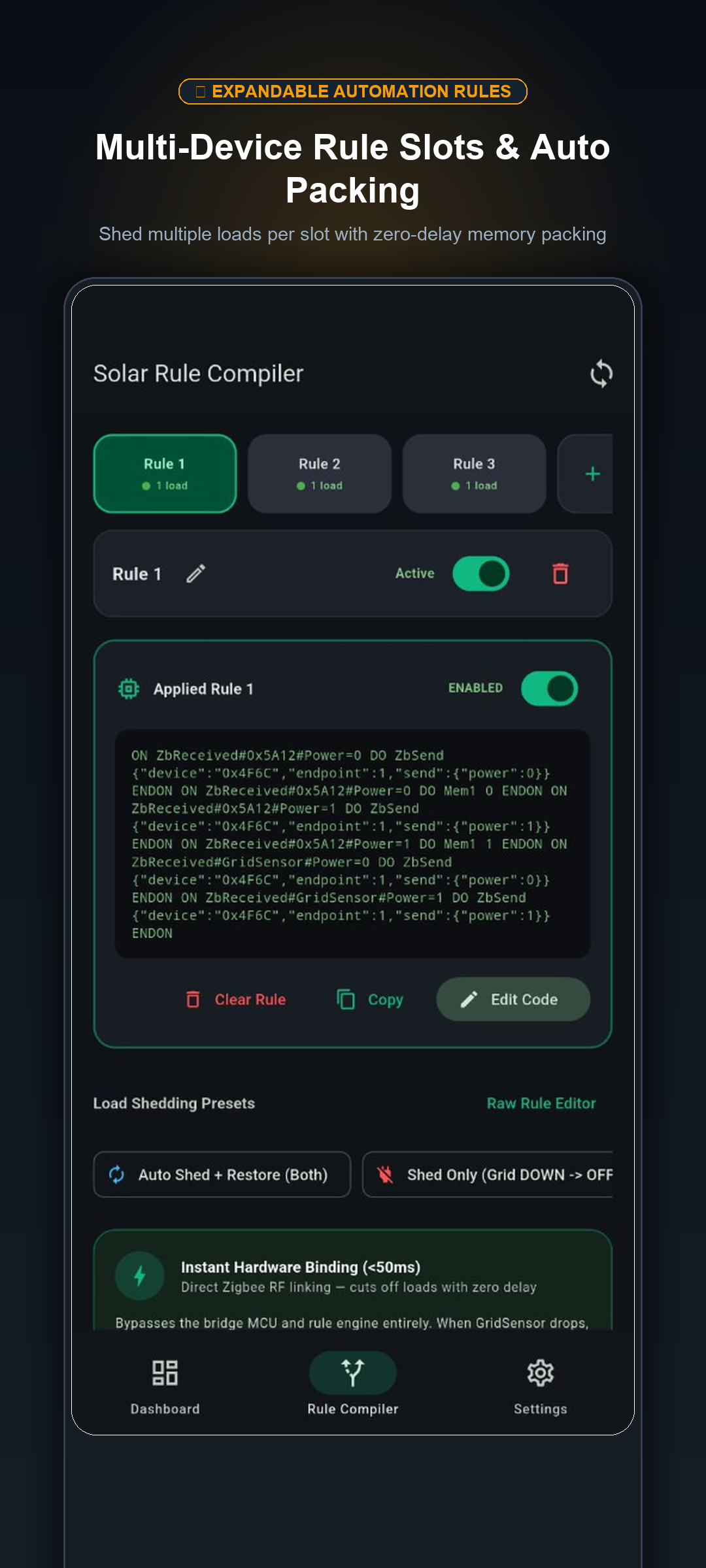
Replaces asynchronous Backlog queues with atomic, synchronous DO ZbSend ... ENDON clauses compiled directly into Tasmota packet interrupt loops.
Multi-Slot Bridge Memory Packing
Breaks Tasmota’s physical 3-slot rule limit by managing unlimited logical rules and automatically packing clauses into hardware memory with overflow detection.
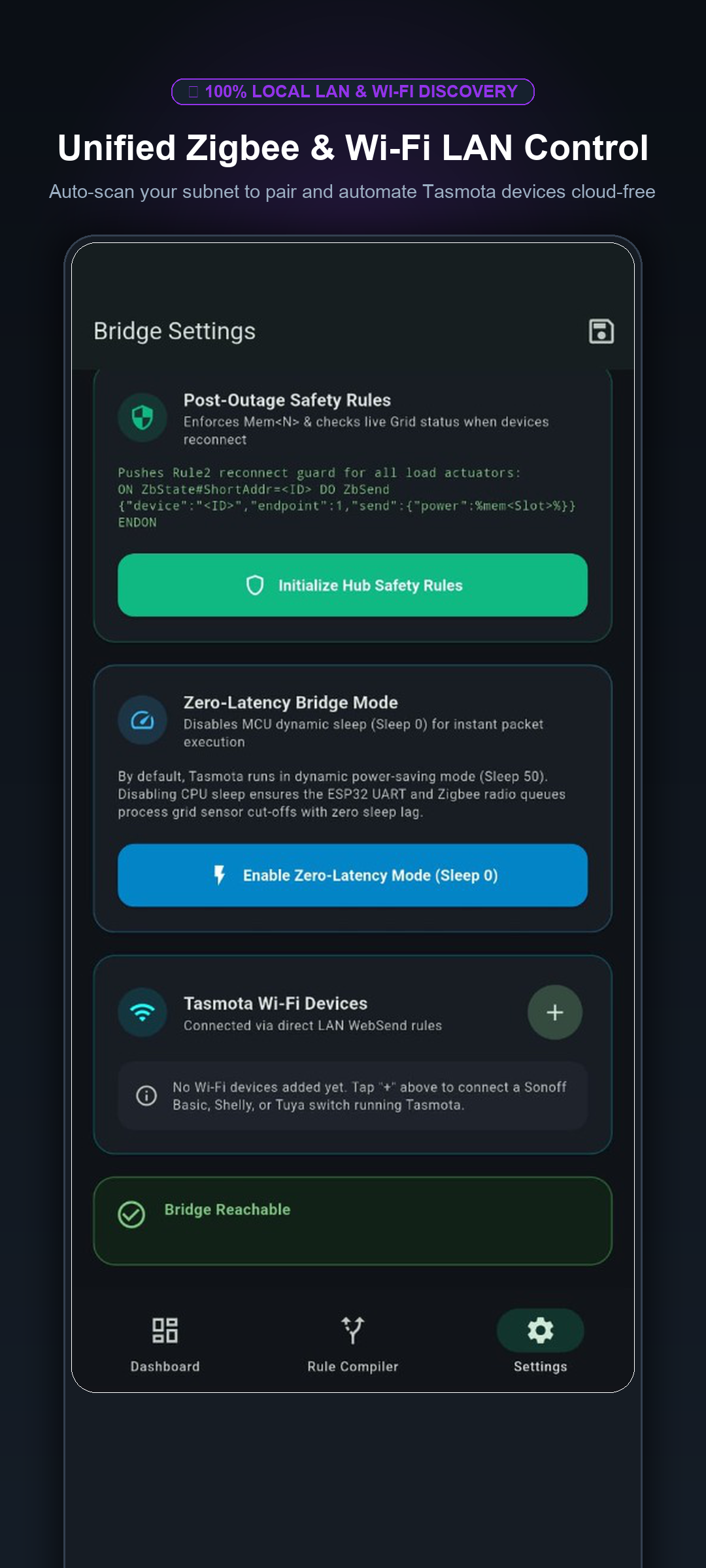
Local Wi-Fi Subnet Discovery
Asynchronously sweeps subnet Port 80 to discover Tasmota-flashed Wi-Fi relays and plugs, pairing them alongside Zigbee devices with instant WebSend rules.
Rule 2 Reconnect Safety Guard
Monitors device power-on boot events and mesh rejoins to restore expected power states from non-volatile memory slots (%memX%) within 50ms.